



Takashi Ono, widely influential number theorist and professor emeritus in the Department of Mathematics at Johns Hopkins University's Krieger School of Arts and Sciences, died in Florida on Jan. 11. He was 97.
Renowned as both a rigorous mathematician and thoughtful mentor, Ono was noted for his foundational work in algebraic number theory and arithmetic geometry. The depth and originality of his research were recognized around the globe, and his contributions to the arithmetic theory of algebraic groups, particularly in the study of Tamagawa numbers, continue to influence the field.
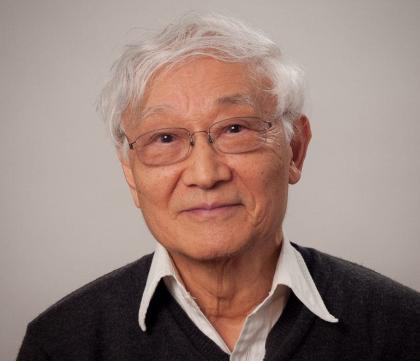
Image caption: Takashi Ono
"Professor Ono's research had tremendous influence in the early development of what is now called the arithmetic theory of algebraic groups, a subject relating to many parts of contemporary algebra and geometry," said Brian Conrad, professor in the Department of Mathematics at Stanford University. "In particular, the elegant 'Ono formula' he discovered to answer a certain counting problem attracted wide interest and its subsequent generalizations are a powerful tool in modern number theory; techniques I learned from his papers were very inspiring in my own research.
"He was one of the last of the generation of mathematicians who emerged post-war in Japan and contributed their talent to raising the mathematical level of this country to great heights."
Jacob Tsimerman, professor of mathematics at the University of Toronto, built his doctoral degree at Princeton around Ono's work. "He had many fantastic results, but his work on arithmetic groups and Tamagawa numbers was both extremely beautiful and far reaching. He clarified fully a subject that was highly mysterious before he came onto the scene," Tsimerman said. "I personally owe him a great debt professionally as his results were the engine behind my own PhD, as well as so much else in modern arithmetic geometry, and underpin the thread that runs from the formulas in algebraic number theory to the analytic estimates that are so crucial in the field of unlikely intersections."
Born in Nishinomiya, Japan, Ono left postwar Japan for Princeton's Institute for Advanced Study in 1959 at the invitation of J. Robert Oppenheimer. He served as mathematics professor at the University of British Columbia from 1961 to 1964, and as tenured professor at the University of Pennsylvania until 1969. He was then professor in Johns Hopkins' Department of Mathematics until his retirement as professor emeritus in 2011.
Physics major Edmund Synakowski, A&S '82, took linear algebra with Ono in 1979. Ono challenged his students by leading them first through an abstract pathway, which would result in general principles forming a high-level framework to then be applied to specific problems. Synakowski, now vice provost for research and innovation at Stevens Institute of Technology as well as professor in the departments of Physics and Systems and Enterprises, recalls that Ono reassured the struggling class that they were doing the hard work of crafting a "master key" that would open many doors.
"The path we traveled in going from this challenging starting point to seeing how the framework could be brought to bear on specific problems was, for me, a memorable and powerful journey," Synakowski said. "He opened for me the clearest window I've ever had to how a mathematician needs to think."
In addition to the clarity of thought and high standards that he passed along to generations of colleagues and students, Ono was known for his love of music, especially classical piano. Intellectually, he instilled mathematical confidence in his students; personally, many became family.
"He was very inspiring and exciting, and generously shared his ideas. His teaching style was very relaxed, clear, colored with a certain sense of humor, and we, his students, felt at ease," said Francois Ramaroson, A&S '80 (PhD), now professor at Howard University's Department of Mathematics. "He leaves a legacy of deep and beautiful mathematics, shared with compassion and kindness in the classroom, his office, or publications. As time went by, he and Mrs. Ono treated me and my wife as if we were members of their family."
Jasbir Chahal, A&S '79 (PhD), now professor of mathematics at Brigham Young University, earned his doctoral degree under Ono. "He was an outstanding mentor. I learned a lot from him. Whatever I am, I owe largely to him," Chahal said. "Moreover, he treated me like a family member. It feels like I lost my own father."
Ono earned his PhD at Nagoya University in 1958. He was an invited speaker at the International Congress of Mathematicians in Moscow in 1966, and was elected a Fellow of the American Mathematical Society in 2012 for outstanding contributions to the creation, exposition, advancement, communication, and utilization of mathematics.
Survivors include his wife, Sachiko Ono; their three sons, Momoro Ono (Heejoung), Santa J. Ono (Wendy), and Ken Ono (Erika); and five grandchildren.
Posted in University News
Tagged mathematics, obituaries