


When Sarah Smith went in for a routine 20-week anatomy scan, she got news no expectant parent ever wants to hear. Her son, Levi, had a lower urinary tract obstruction causing kidney failure.
Sarah was experiencing early pregnancy renal anhydramnios, or EPRA, a condition in which the baby is unable to make or pass urine, meaning the amniotic fluid needed for the baby to grow their lungs is not present. Untreated, the condition is considered universally fatal. It was a devastating diagnosis.
Video credit: Aubrey Morse / Johns Hopkins University
"The anatomy scan definitely changed our life from that point forward; there was a before that and an after that," Sarah said. "We were told that we could either terminate or carry to term, knowing that he probably wasn't going to survive."
Sarah and her husband, Zack, were hopeful for any other option. Eventually they discovered a trial happening at the Johns Hopkins University School of Medicine: the Renal Anhydramnios Fetal Therapy (RAFT) study, an experimental study that required amnioinfusions—injections of saline along with electrolytes and antibiotics into the uterus—to help babies develop their lungs enough to be able to survive outside of the womb. The RAFT trial "was our lifeline," Sarah said.
"We met with the fetal therapy team there and had to do some testing—an MRI, an [echocardiogram] of his heart, a placental biopsy, and those kinds of things to see if we could qualify for it," Sarah said. They did qualify, and shortly after that initial consultation, the Smiths temporarily moved to Baltimore from Pennsylvania to begin regular amnioinfusions—weekly at first, then twice a week, and by the third trimester three to four times per week.
"This was not a widely available therapy," said Meredith A. Atkinson, associate professor of pediatrics in the Division of Pediatric Nephrology and pediatric nephrologist at Johns Hopkins Children's Center. "This is the first time it was offered as part of a clinical trial."
Leading up to Levi's birth, Sarah received amnioinfusions for several weeks. For someone who almost passed out from her prenatal blood work, long needles were a challenge. "My wife was afraid of needles when we first started this," Zack said. And it wasn't just the needles—the trial came with a bevy of potential complications, including early rupture of membranes and early delivery in those who received amnioinfusions. But that didn't deter Sarah: "I was willing to do whatever I could to get him here."

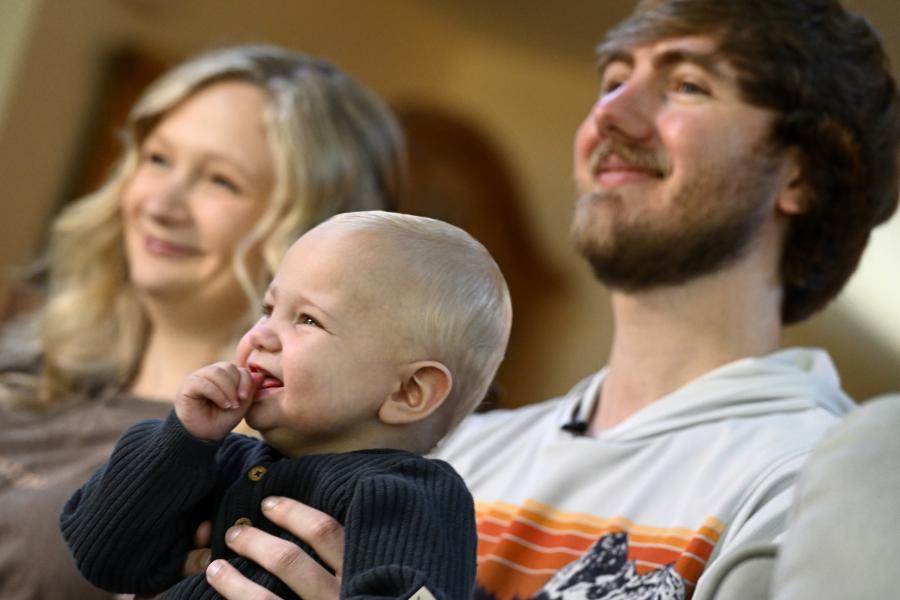
Image caption: Levi Smith
Image credit: Will Kirk / Johns Hopkins University
Levi Smith was born on Aug. 16, 2024, with a strong cry that was a welcome sound to his parents. Shortly after delivery, he underwent imaging to prepare him for surgeries that were to come.
"The course after a baby [like Levi] is born, it's not smooth," said Michelle Kush, assistant professor of gynecology and obstetrics in the Johns Hopkins Center for Fetal Therapy. The journey after birth is "often filled with many hills to climb, valleys to overcome." In Levi's case, he needed surgery to place a peritoneal dialysis catheter, a central line for IV nutrition, and another surgery for his lower urinary tract obstruction. After a few months in the neonatal intensive care unit, Levi and his family were able to go home.
"He's on dialysis every night, which was overwhelming at first," Zack said. "We had to learn the whole process, but at this point we're kind of pros at it."
Dialysis at home is needed until Levi is big enough to go through the surgery to receive a kidney transplant. Once he does receive a kidney, his dad believes he will live a relatively normal life. "The future is bright for him."
Without research funding, the RAFT trial would not have been possible. "The funding for this trial was critical," said Jena Miller, associate professor of gynecology and obstetrics in the Center for Fetal Therapy. Funding from the National Institutes of Health and the North American Fetal Therapy Network allowed Miller and Atkinson to build a multi-center, non-randomized clinical trial conducted at 13 fetal intervention sites across the country. This network ensured that those who needed the intervention were able to access it. "It made a world of difference for them," Miller said. A total of 55 participants were enrolled, and of those 50 underwent serial amnioinfusions across all sites.
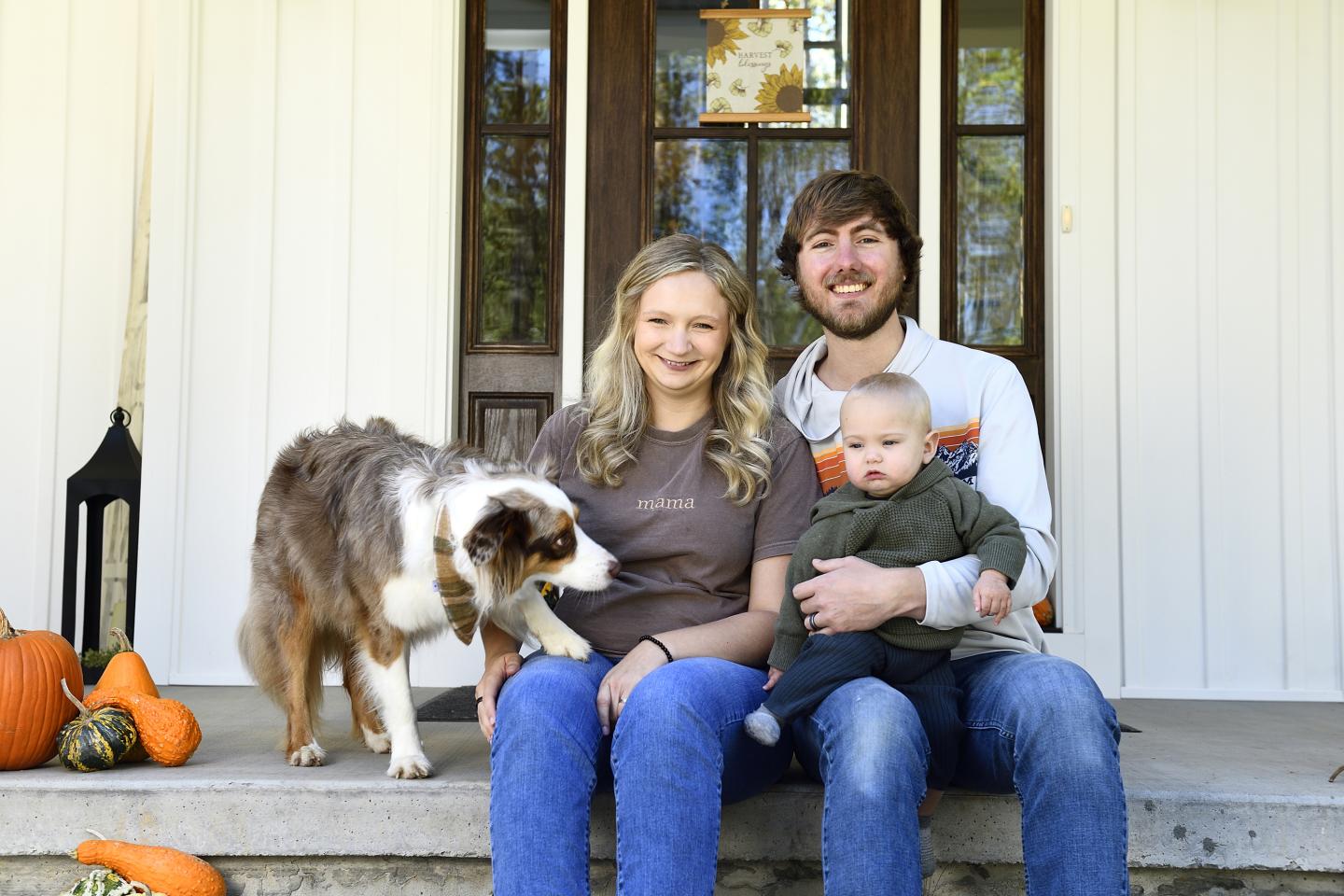
Image caption: The Smith family at home
Image credit: Will Kirk / Johns Hopkins University
Zack Smith said the trial gave him and his wife something to hold onto when they most needed it: "When we were getting the worst news of our lives, we had some hope." Sarah agreed that without the RAFT trial, Levi likely wouldn't be here today. "It's important," she said. "The research, it does save lives."
The RAFT trial was just the beginning, helping researchers answer the initial question of whether the intervention to restore amniotic fluid would rescue the lungs. Now, as the intervention is offered more widely, patients going through amnioinfusions have the option of providing data to a RAFT data registry. The information collected will help researchers continue to learn "about what the risks and benefits of this therapy are, and what the long-term outcomes for infants and ultimately children are," Atkinson said. "This is incredibly important data for optimizing the outcomes for families and infants."
Sarah Smith said she hopes the lifesaving intervention can be common practice rather than experimental in the future.
"I think the hope is that [the research] will lead to that eventually. One day, it can be standard," she said. "It was a tough road for Levi, … [but] research is the reason he's able to be here and that the trial's able to exist and hopefully help other kids."
Posted in Health
Tagged pediatrics, nih funding, nih