Peabody Institute faculty artist Denyce Graves is among the distinguished artists, administrators, and advocates named to OPERA America's 2025 Opera Hall of Fame. The organization recognizes the achievements of outstanding Americans and Canadians who have strengthened the art form and field. Graves and the 2025 class of honorees will be inducted at the OPERA America Salutes awards dinner in March 2026.
Theodore L. DeWeese, dean of the medical faculty at the School of Medicine and CEO of Johns Hopkins Medicine, has been named among this year's recipients of the Ellis Island Medal of Honor, a national award recognizing lasting contributions to the United States while embodying the values of the American spirit and the legacy of immigration. DeWeese was recognized for his global leadership in cancer research and for his scientific advisory role with the Radiation Effects Research Foundation in Hiroshima, to which he was appointed by the National Academy of Sciences.
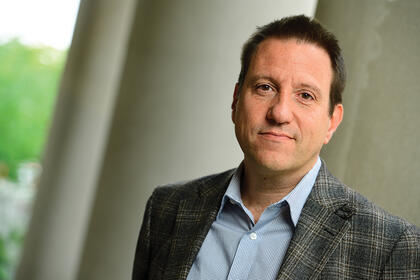
Image caption: Derek Cummings
Epidemiologist Derek Cummings, Engr '01 (MS), '04 (PhD), BSPH '04 (MHS), returns to his alma mater as the Bloomberg Distinguished Professor of Infectious Disease Dynamics. He has appointments in the Department of Epidemiology in the Bloomberg School of Public Health and the Department of Biomedical Engineering in the Whiting School of Engineering. Cummings investigates how pathogens spread within populations, emphasizing the role of immunity in shaping these patterns. His research in immuno-epidemiology explores how the immune response can be leveraged to detect infections and how public health strategies can best take advantage of our immune system's adaptability. He concentrates primarily on respiratory and vector-borne infections, including dengue, influenza, measles, chikungunya, and SARS-CoV-2. He played a key role in the response to COVID-19, evaluating factors associated with severe COVID-19 illness, immune responses, and the role of genetic factors in coronavirus susceptibility. Cummings, who returns to Johns Hopkins from the University of Florida, brings his experience back to Hopkins as part of the BDP cluster Preparing and Responding to Emerging Pandemics.
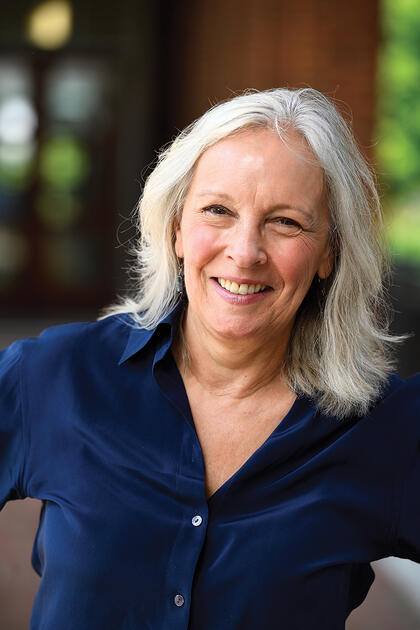
Image caption: Gillian Hadfield
Gillian Hadfield, an expert in technology, law, and institutional economics, joins Johns Hopkins as the Bloomberg Distinguished Professor of AI Alignment and Governance. She is part of the Promoting and Governing Technological Advances cluster, and she has faculty appointments in the university's School of Government and Policy and in the Department of Computer Science at the Whiting School. She leads research to reimagine how systems can evolve to meet the demands of a changing world and emerging technologies. Her focus is on the AI alignment problem: how to make sure that AI systems behave in ways that are good for us as humans. Hadfield believes that for artificial intelligence to be beneficial to society, AI agents must be built to understand and respond to human normative systems, including both informal norms and formal systems of law. The rapid introduction of AI agents that do not behave as humans, she says, could cause systemwide disruption. In addition to her roles at Johns Hopkins, Hadfield is a Canadian Institute for Advanced Research AI Chair, faculty at the Vector Institute in Toronto, and a faculty affiliate at both the University of California, Berkeley Center for Human-Compatible AI and the University of Toronto Schwartz Reisman Institute for Technology and Society. She holds a JD degree from Stanford Law School and a PhD in economics from Stanford University.
Two Peabody faculty artists have released multi-CD box sets. HieYon Choi, a piano professor at Peabody, released Testament, a CD box set of all 32 Beethoven sonatas, recorded at Berlin's Teldex Studio. Steven Spooner tackles the entirety of the solo piano works composed by Franz Liszt with a 10-CD box set titled Aspects of Liszt. The album was supported in part by a 2024 Dean's Excellence Accelerator Grant.
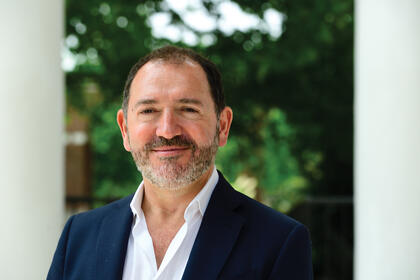
Image caption: Domenico Giannone
Domenico Giannone, an internationally recognized thought leader in econoassocimetrics and macroeconomic forecasting, joins Johns Hopkins from the International Monetary Fund as the Bloomberg Distinguished Professor of Economics and Statistics. He has appointments in the Krieger School of Arts and Sciences' Department of Economics and the Whiting School's Department of Applied Mathematics and Statistics. The focus of his work has been on improving forecasting models to handle high-dimensional data while ensuring timeliness, interpretability, and robustness. One of Giannone's most influential contributions is the development of nowcasting, a real-time economic forecasting method used by policymakers, economists, and almost every central bank worldwide. His focus now is on improving how economic activity and risks are monitored in low-income countries, where data is scarce, and delays and disruptions are frequent. Giannone envisions supplementing the scarcity of official data by adopting alternative data sources, including the potential of using language as data, thanks to recent advancements in artificial intelligence.
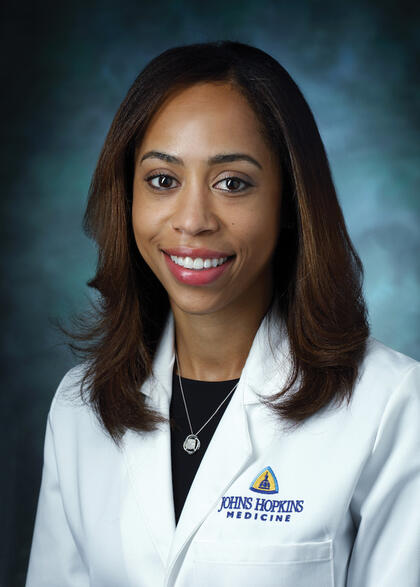
Image caption: Sarah Conway
Sarah Conway, an assistant professor of medicine at the School of Medicine, has been named a Rising Star 2025 by Modern Healthcare, a media company that focuses on the healthcare industry. The designation celebrates the outstanding contributions of women across the healthcare industry, highlighting their efforts in improving care delivery, promoting health equity, shaping policy, and advancing gender equality in health care.
Four members of the Krieger School's Department of Mathematics have been invited to speak at the 2026 International Congress of Mathematicians in Philadelphia. The congress is considered the top showcase for new developments in math. The professors are Jacob Bernstein, vice chair of the department, whose work focuses on geometric analysis; Chikako Mese, who studies differential geometry and geometric analysis; Emily Riehl, whose focus is higher category theory, homotopy type theory, and computer formalization; and Ziquan Zhuang, who studies algebraic geometry with a focus on birational geometry and K-stability.
The Indispensable Role of Blacks at Johns Hopkins University, an exhibit and website that recognize trailblazing Black students, faculty, and staff who have strengthened the institution's legacy, inducted five new members at a ceremony in June. They are Joel N. Blankson, an HIV researcher and clinical fellow at Johns Hopkins in the early 2000s; Nathan Connolly, associate professor of history in the Krieger School; Cleon Davis, chair of the Electrical and Computer Engineering Program in the Whiting School and a member of the Principal Professional Staff at the Applied Physics Laboratory; Cherita Hobbs, executive director of strategic human resources delivery at Johns Hopkins; and Shani Mott, a lecturer in the Center for Africana Studies and Department of History at Johns Hopkins, who died in March 2024. She was the wife and longtime collaborator of Nathan Connolly.
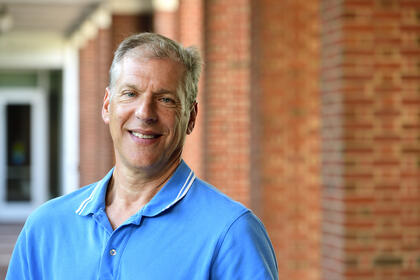
Image caption: Daniel Kammen
Daniel Kammen, an expert in renewable energy, climate policy, and sustainable development, joins Johns Hopkins as the Bloomberg Distinguished Professor of the Just Energy Transition. He has appointments in the School of Advanced International Studies and the Department of Civil and Systems Engineering in the Whiting School, and he is part of the BDP cluster Sustainable Transformations and Energy. His research combines advanced modeling of energy systems with practical implementation, such as designing mini grids for rural communities and decarbonizing residential water heating in California. His work is at the cutting edge of renewable energy deployment, emphasizing energy justice and climate resilience as core pillars of a sustainable world. He has been recognized for his contributions to climate science and policy, including contributing to the Nobel Peace Prize for his work on the U.N. Intergovernmental Panel on Climate Change. Kammen holds a PhD in physics from Harvard. He joins Johns Hopkins from the University of California, Berkeley, where he was the founding director of the Renewable and Appropriate Energy Laboratory and the James and Katherine Lau Distinguished Professor of Sustainability.